La Gabbia della Fantasia | Mostre e installazioni

Edition 2026

La fatica di vivere. Il circo e gli acrobati di Ilario Fioravanti

curated by Pietro Dani, Cinzia Dori, Diletta Tosi and Kristl Scheerlinck for Associazione Culturale Pennabilli Antiquariato, in collaboration with Associazione Culturale Ultimo Punto / Artisti in Piazza and Casa dell’Upupa

art exhibition • Palazzo del Bargello (p. 8)
Preview: Sunday, 7 June 2026, 6.00 pm

The circus, populated by its tumblers, jugglers and acrobats, is a liminal space, suspended between lightness and melancholy, a metaphorical stage for the complex nature of humankind.

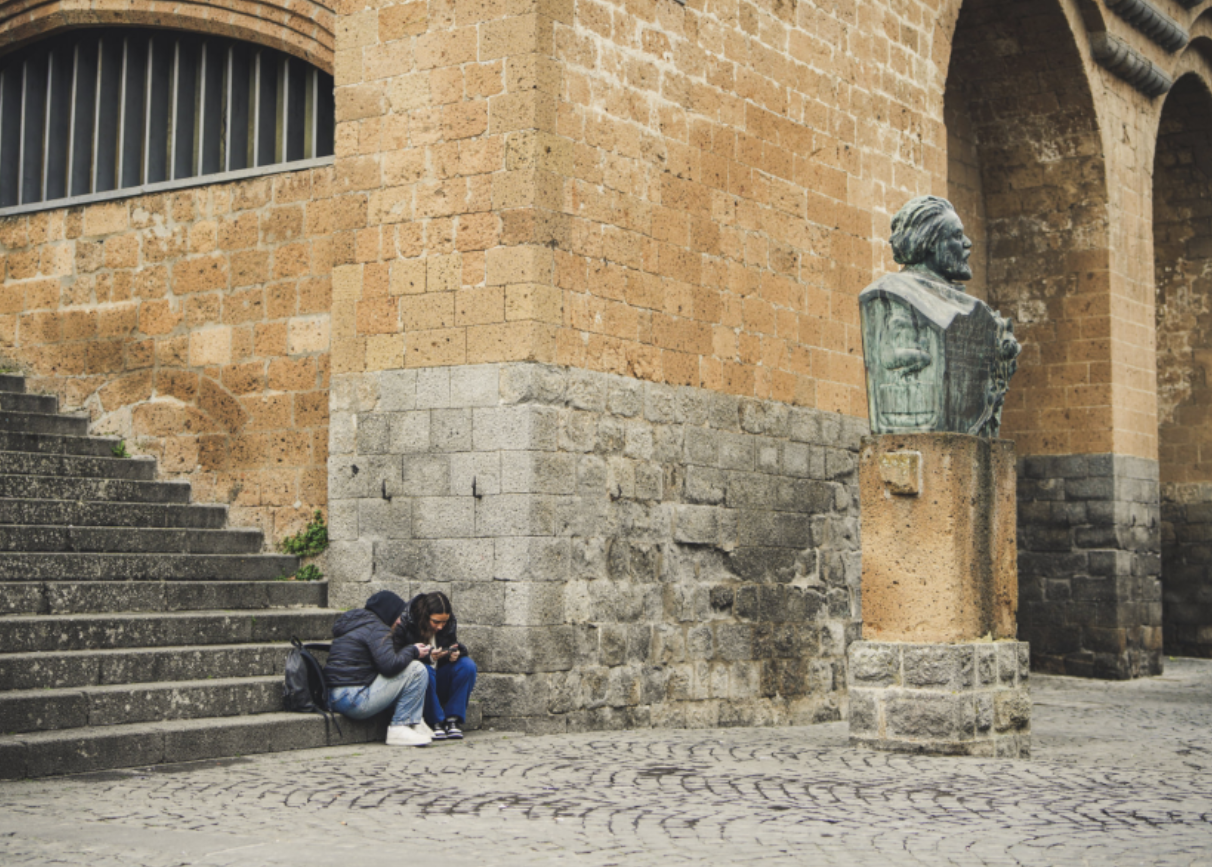
This is the creative obsession of the sculptor, painter and architect Ilario Fioravanti, brought to life inside the historic Palazzo del Bargello in Pennabilli, whose rough stone walls are able to embrace the atmosphere that can only arise within the circus: a material air made of fragile balances and uncertainties, capable of stripping the human being of the garments worn to protect themselves from the gaze of the world.

On the faces shaped by Fioravanti’s hands is portrayed the human suffering of those who, through their gestures, enchant the spectator, building for them an abstract place of fascination while concealing in their eyes the burden of the hardship of living.

The polychrome terracotta figures, the many drawings and the notes left by the artist in his notebooks are the result of a continuous investigation, in which the stillness of the bodies retains the memory of an energy in the making.

Yet it is precisely from this energy that the wonder and astonishment can be continually reborn.

Special opening during Artisti in Piazza
11–14 June 2026
10.00 am–1.00 pm | 2.00 pm–7.00 pm

Mr. AIP

curated by Andrea Riva with the collaboration of the Staff

site-wide installation telling the story of 30 years of the Festival • Places to discover around the village of Pennabilli

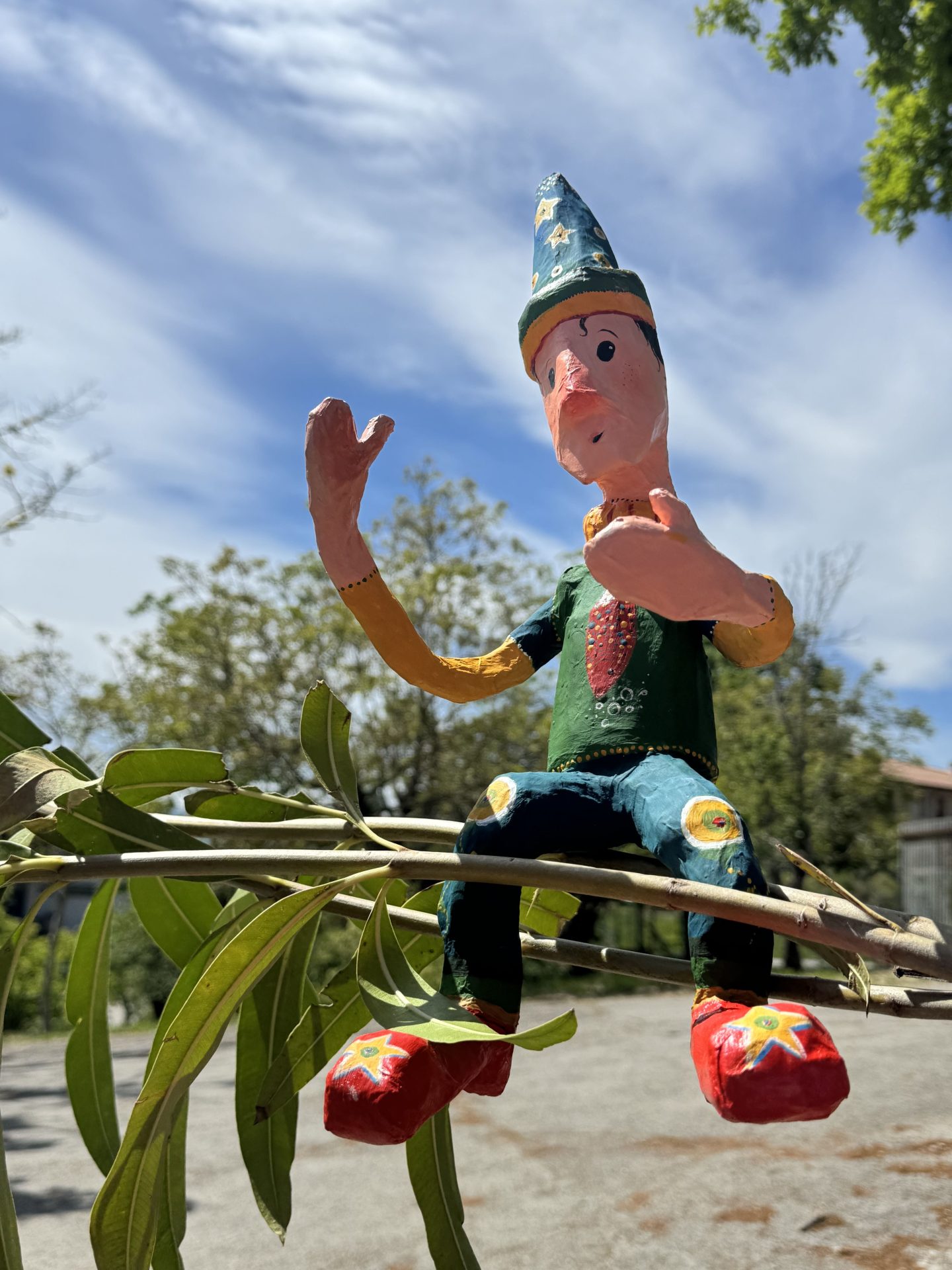
Dear friend, in the corners of Pennabilli you will find the pages of a diary written for me — or rather, FOR YOU.

Lift your eyes as you walk, while everything around you is dancing. Look around, look up, and discover the long journey of Artisti in Piazza. You will find thirty versions of me. I will be hanging there, watching. You will catch aspects, objects and colours that have shaped my gaze on each edition of the Festival. Nearby, there will be the diary where you can read what I have to tell you. Share it, if you wish — with someone, on social media, with a tag. Take a photo of it. Or keep it for yourself. Read those thoughts and then go on, keep walking, go and dance. They will still weave a long thread. Or simply let them go. There are thirty years to retrace, but many more still to build.

We are embers.
We keep alive what the present would like to extinguish”.

Texts by Lorenzo Lunadei
With contributions from: Arlene, Lu, Tete, Fabi, Marta, Humbe, Lucone, Giulia, Ines, Eva, Lorenzo, Gogo, Francesco, Sofia, Enrico, Lia, Vittoria, Monica, Kati, Giulia, Martina, Manu, Maya, Juri, Susi, Ulisse, Francesca, Nico, Andrea, Sir, Lucrezia, Giacinta, Patton, Giada, Marghe, Dimi, Tino, Luca, Zizi, Uli, Franci, Dedè, Richi, Geremia
Material recovery: Federica and Valentina

Prima-V-Era

by Luca Faranfa

photographic exhibition • Grottino del Teatro Vittoria (p. 6)

Prima-V-Era is a project about coexistence between the eye and life.

Luca (the photographer), Federica, Federico and Matteo (Orto in Giro, the farmers) meet and come to know each other again at the end of winter, just before spring.

Luca arrives in Gallano (Valtopina, Umbria) in February 2024, looking for a farming reality he can tell the story of. From that moment on, for an entire year, through the changing seasons, Luca visits the inhabited hill and the cultivated little valley whenever he can. After work or early in the morning, at weekends and even late at night, he remains curious about the many forms life can take.

A relationship takes shape and opens up, leaving room for the authenticity of gestures and gazes, which gradually unfold and reveal themselves.

In this way, the story of a farming reality working on the margins is told — on the margins not only of a territory, but also of an economic system that has led to the industrialisation of production and distribution, favouring monoculture and varietal selection at the expense of biodiversity.

This is how landscapes are created that can be repeated anywhere, becoming “non-places”.

Agricultural realities working on the margins are the custodians of an environment that is special precisely because it is unique.

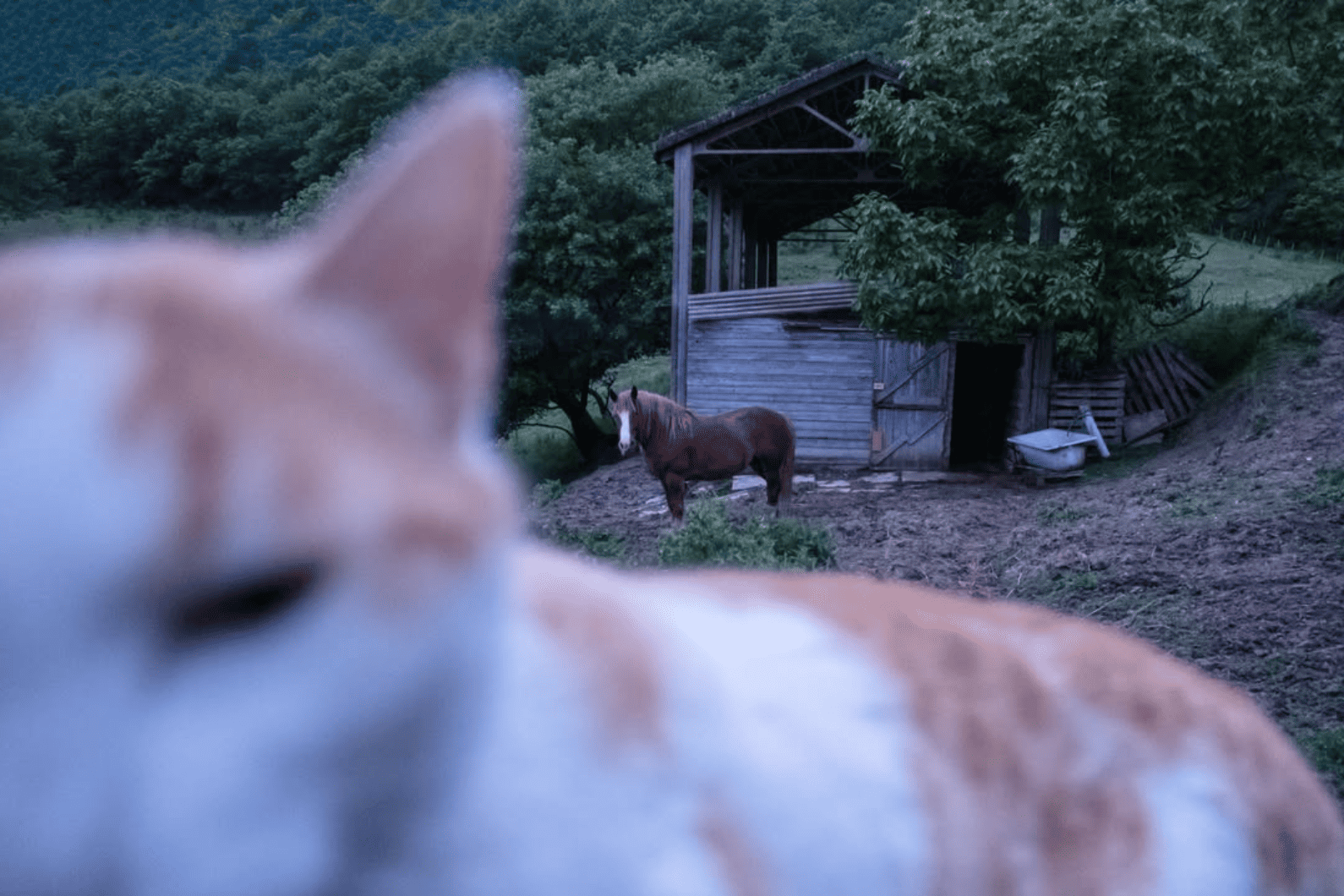
For more than ten years, in the small valley of the Saletto stream, Orto in Giro has been growing fresh seasonal vegetables, ancient grains and legumes, which are distributed through a short supply chain to the people living in the surrounding area.

There is also an apiary, a processing workshop, and the Casa dei Semi della Valle Umbra, where seeds from ancient local varieties are recovered — vegetable seeds and more besides.

Since 2017, the garden has also been worked with the help of Liberata and Olivia, two mares of an ancient Italian draught breed (TPR), who as foals had been destined for slaughter.

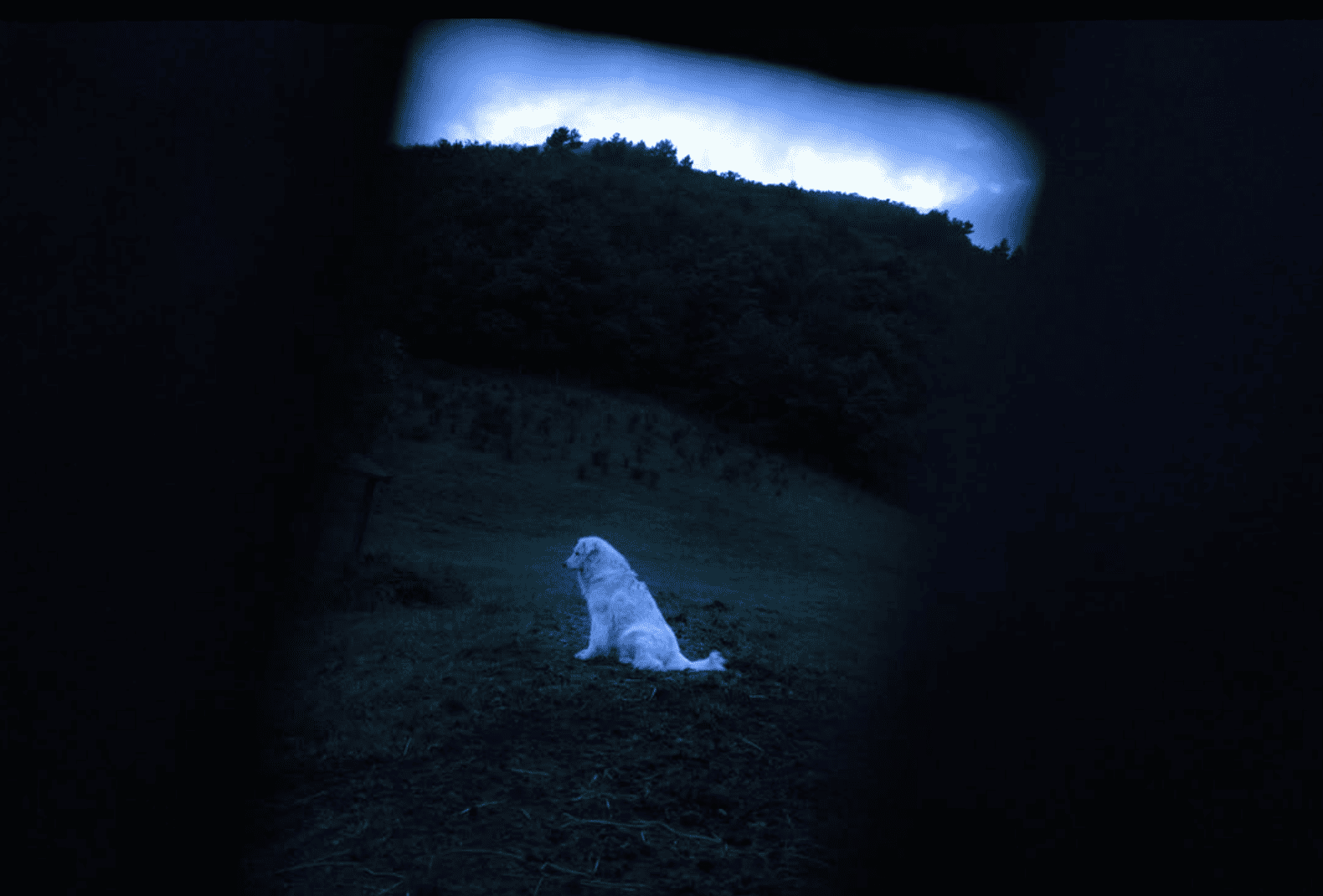
Luca tells a small part of this story. He tells it from a different angle: one might say that he captures its hidden reflection, rather than what appears on the surface.

Disconnessi

by Alessandro Ceccarelli

photographic exhibition • Grottino del Teatro Vittoria (p. 6)

Disconnected is a photographic journey exploring the transformation of our society: how people reshape their lived experience — from posture to behaviour — through the constant use of mobile devices.

Bent faces, distracted eyes, interrupted gestures: each image is an invitation to stop and truly observe. We are living through a deep and silent transformation, in which the very shape of our lives is being moulded around social networks and the algorithms that study our every interaction, habit and choice.

Pasolini had already sensed it: he spoke of a new “democratic regime”, or perhaps a new form of fascism, which, through consumer society and cultural homogenisation, would overwhelm every form of individuality.
Today, that prediction has taken the form of a technology that resembles us, yet has surpassed us. A technology that feeds on dopamine and the desire for approval, where likes and views shape our sense of belonging and alter our relationships, our psyche, and our very perception of the world.

We are caught in a form of modern slavery capable of making the betrayal of a pair of lovers go viral across the world, while at the same time normalising the sight of children beneath rubble in between a post, a story of a sunset, and an aperitif selfie. We have become compulsive consumers of content, objects and experiences, disconnected from the present, from our essence, and from one another.

Each touch of the screen takes us a little further away from tangible reality.

To stop. Now and then. Whenever possible.

To look around us, to meet each other’s eyes again, to truly listen to those close to us. To avoid letting virtual connection take the place of real connection.

What is needed is a critical, conscious — almost resistant — use of these tools that carry us into an “other” world, so that we may learn to defend ourselves from what, every day, we place in our pockets.

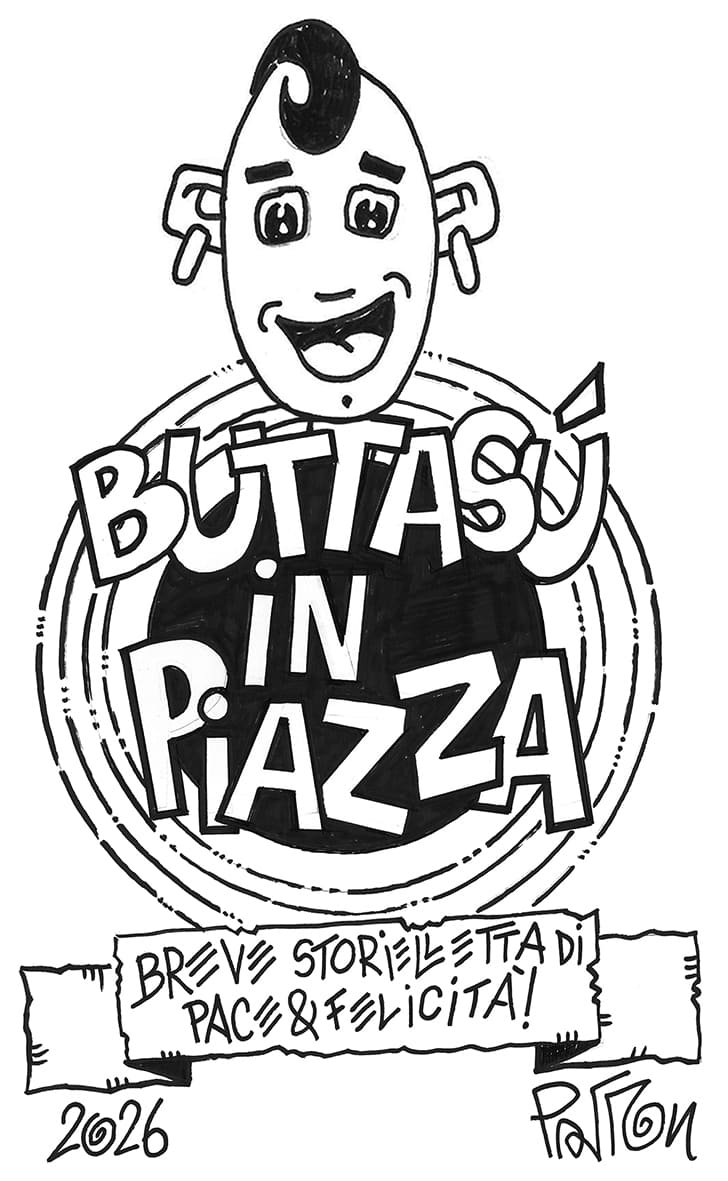
“Buttasù in Piazza”, un nome e una mostra nati per gioco

curated by Patton, aka Fraternali Patrizio

comic exhibition • Museo Orazio in Tibet (Via San Rocco, 17)

11 • 12 • 13 • 14 June | Opening hours 10.00 am–12.30 pm / 2.00 pm–7.00 pm – the Museum is open for guided tours at the same times
Preview: Sunday, 7 June 2026, 6.30 pm

“The name was born many years ago, when Enrico and I were trying to describe Pennabilli’s square during the festival: in simple words, an indescribable kind of ‘crazy mess’ typical of the days of Artisti in Piazza.

Buttasù is a term that does not exist in Italian, but where we come from it conveys the idea perfectly! The exhibition was born almost as a joke, on Lucia’s request, when she laughingly asked me for a strip dedicated to the festival; and so, without her knowing — she probably did not even remember asking — I made one strip, followed by a second strip, then a third… a fourth… and this is the result! A tiny little exhibition… little… little!

I am Patton, aka Fraternali Patrizio. A friend of the fantastic Festival of Pennabilli. I am not from Pennabilli, although I am often in Pennabilli. In Pennabilli I have many wonderful friends.

And do you know why I often come to Pennabilli? Because it feels good to be in Pennabilli!

Because in Pennabilli…

Well! To understand it, you have to come to Pennabilli too!

I do not quite know how to explain it… but maybe I do… come and visit my little exhibition in Pennabilli!

Maybe you will understand it too!”.

SONORIA VEGETARIA: an ear for listening to the landscape

Land art work by Ars Ruralis with the sound installation “Sonoria Remix” by Emiliano Battistini
in collaboration with Parco Sasso Simone e Simoncello

land art with sound installation • Giardino di Fra (p. 19d)

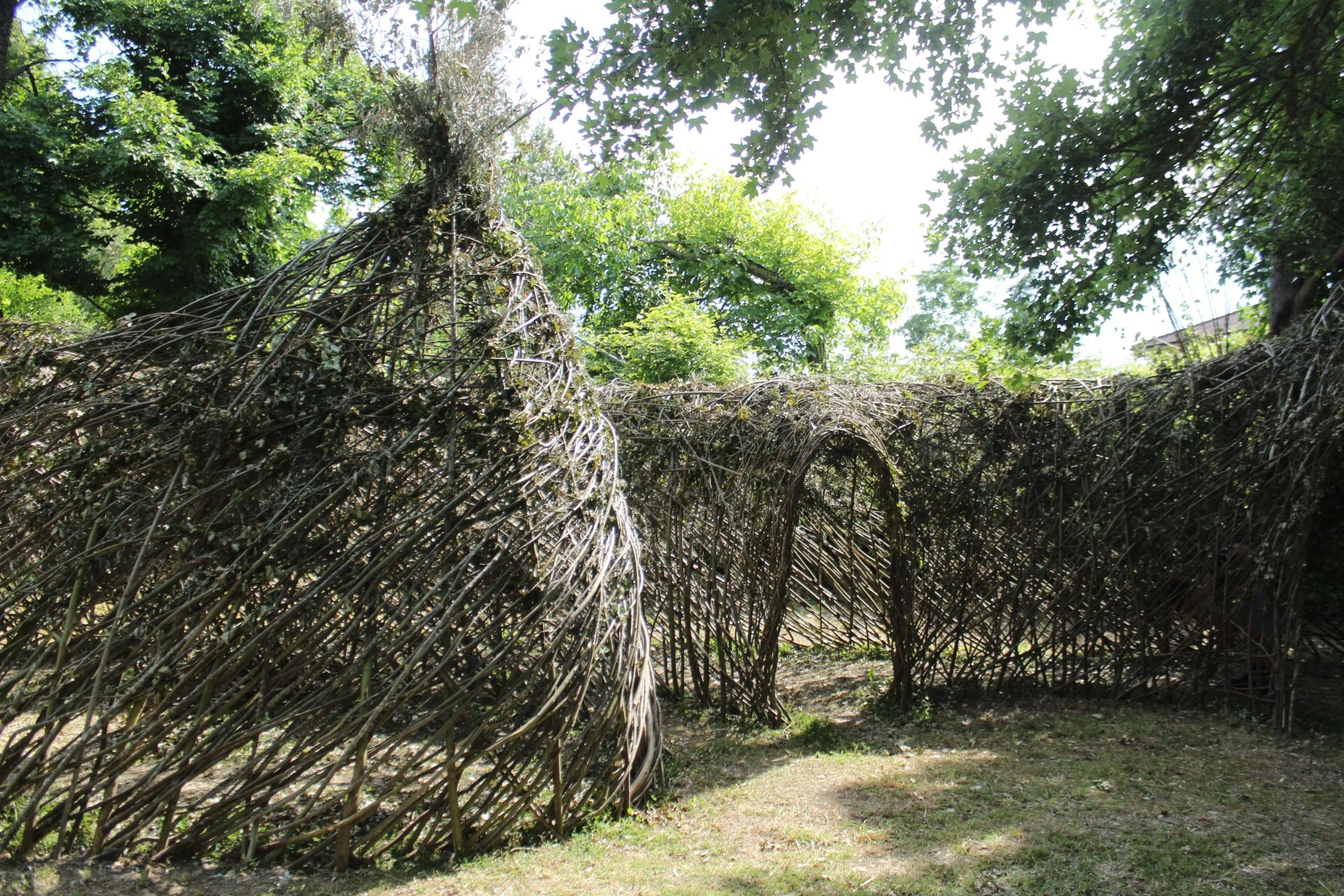
A large organism woven from living branches emerges from the landscape like an ancient and imaginary presence, a form that evokes at once a shell, a shelter, and an ear listening.

The sculpture “Vegetaria” (vegetal community experience), created by Ars Ruralis in 2024 through a participatory process involving the local community, is now renewed and enriched by a new architectural element that amplifies its vocation: to become a sounding board for the sounds of the territory.

Inside it comes to life “Sonoria Remix”, a sound installation that gathers and reworks recordings made through the project “Sonoria” during two years of exploration across the woods, grasslands, villages and plateaus of Parco Sasso Simone e Simoncello. Birdsong and frog calls, wind through the trees, bells, tractors and voices from the valley are woven together into an immersive composition that conveys the sonic richness of the landscape.

A place to move through slowly, where one may stop for a few minutes and discover that every territory holds its own music, made of nature, work, memory and human presence.

EXPO sculture in movimento

curated by Girovago e Rondella • Piazza Montefeltro (p. 21c)

A collection of automated puppets from the 5 continents, 7 small theatres, 7 distant places brought into relation through a journey inside the cloister-museum. Upon crossing its threshold, the audience finds itself immersed in the subtle and phantasmagorical world of animated figures, an abyssal and magnificent place for which, for a moment, they are given the keys of access. Somewhere between exhibition and performance, the cloister invites the audience into an initiation to the ancient and astonishing world of animated figures.

Recommended age: 3+. Opening hours for the exhibition will be announced on site (p. 21C).

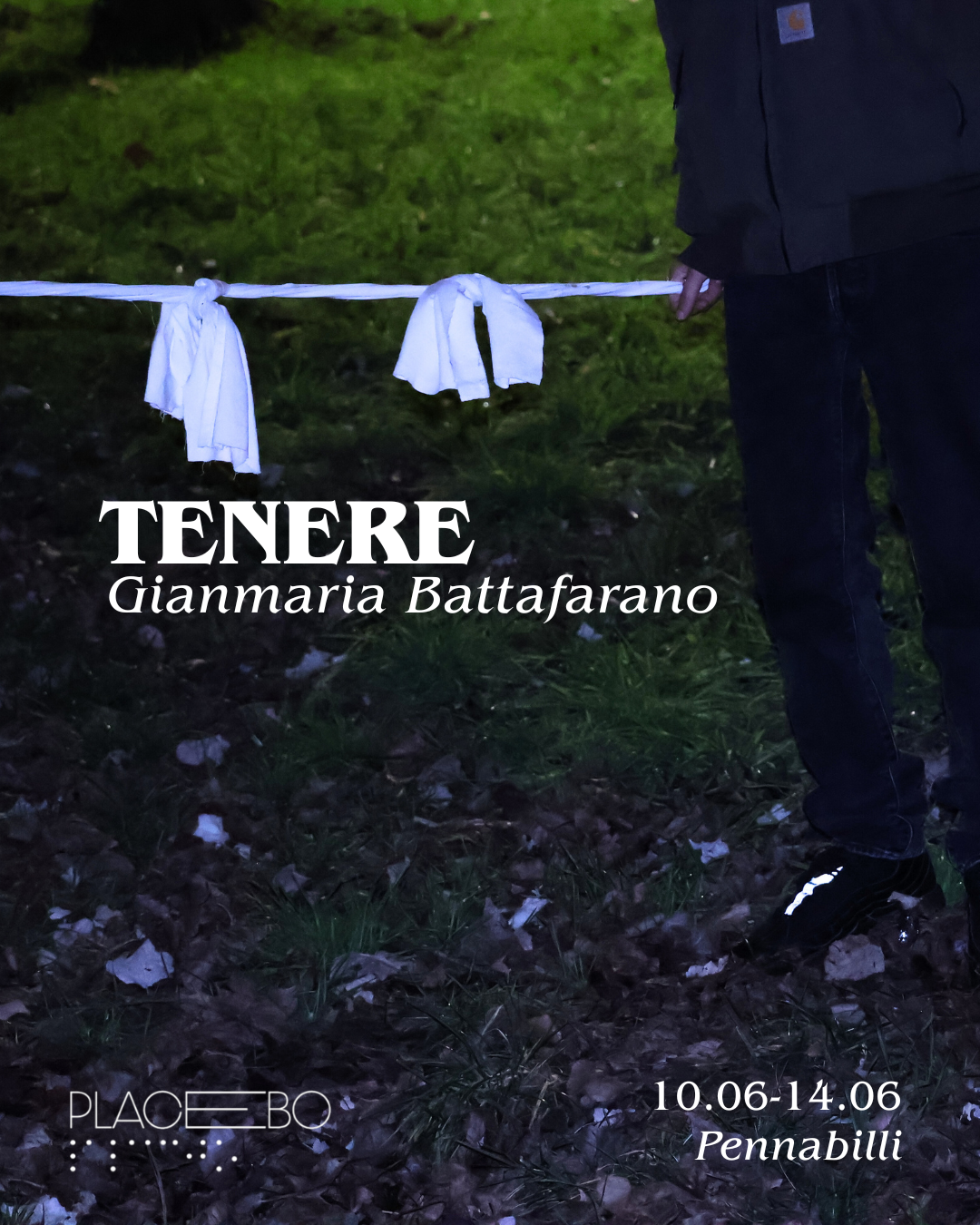
Tenere

by Placebo Collective

Site-specifi installation by Gianmaria BattafaranoTorrigino, Pennabilli

There has always been something urgent about the bedsheet. A companion to sleep and illness, a witness to birth and death, perhaps the most everyday object there is; and yet, in certain moments, capable of turning into a rope, a flag, an escape.

With this site-specific intervention on the tower of Pennabilli, Gianmaria Battafarano performs a gesture that is both simple and radical. The bedsheets — reclaimed, lived-in, donated by the community of Pennabilli — wrap around the tower’s circumference, slip through its windows, and descend along the rock face toward the ravine below. The existing architecture becomes a score: the openings in the stone are already natural passages, the vertical profile of the site is already a narrative.

The chosen material is not neutral. The bedsheet belongs to everyone, from beginning to end: it wraps us when we come into the world, and covers us when we leave it. To use it as a sculptural element means bringing into art an object that has never ceased to be linked to the body, to care, to intimacy. Knotted, it becomes structure. Lowered into the void, it becomes desire.

Verticality is the true protagonist. From the top of the tower, the bedsheets fall in drapes that mark the rhythm of the windows. They are tails, they are hair, they are Rapunzel’s rope falling into the darkness of the ditch below. We do not know whether someone is climbing up or climbing down. We do not know whether this is an escape or a waiting. The gesture remains open, just as the materials are open, just as the surrounding landscape is open.

The tower does not merely undergo the intervention; rather, it hosts it, and in doing so, it reminds us that it has always already been a work of art.

© 1997 - 2026 Ass. Ultimo Punto CF e P.IVA 01447500412 | All Rights Reserved